



Ford Explorer vs. Ford Expedition
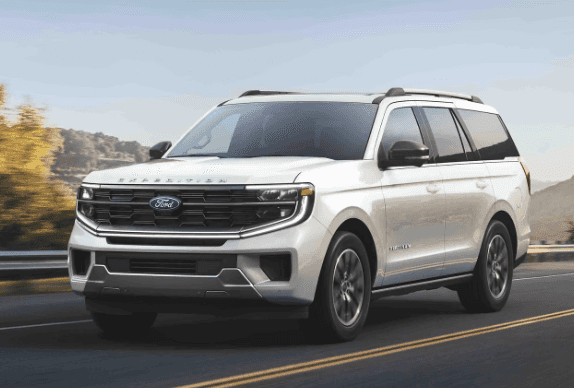
When you’re choosing between the Ford Explorer and Ford Expedition, you’re comparing two of Ford’s most popular and capable SUVs. Both have come a long way since they first hit the market in the early 1990s, evolving to meet today’s needs with more space, better technology, and stronger performance. When comparing the two, the Explorer is more compact and agile, whereas the Expedition offers extra room for larger families. It can be tough to pick between them, but don’t worry; our Jim Bass Ford team is here to guide you through this decision.
Ford Explorer
The Ford Explorer is a great option if you’re looking for a budget-friendly, three-row SUV that seats up to seven. With eight trims to choose from, it’s easy to find a model that fits your lifestyle.
On the tech side, you can upgrade to a 10.1-inch touch screen that connects seamlessly to your smartphone with Apple CarPlay and Android Auto.
Ford Expedition
The Ford Expedition is a full-size, three-row SUV that comes in 10 different trims. Each model offers something unique, such as a giant 15.5-inch touch screen or a premium 22-speaker sound system.
You can choose from luxurious interior options such as mahogany accents or Del Rio leather, while the outside can sport stylish platinum or gloss black wheels. The MAX models are longer, giving you even more space inside.
Detailed Comparison: Ford Explorer vs. Ford Expedition
Both the Ford Explorer and Ford Expedition are designed to keep you and your passengers comfortable on long drives. But how do they stack up in terms of price, powertrain, and towing capacity? Let’s break it down.
Ford Explorer vs. Ford Expedition: Pricing
If you’re working within a budget, the Ford Explorer is the more affordable option, starting at $36,860 MSRP. On the other hand, the Ford Expedition starts at $55,630. Even if you opt for a higher trim, such as the deluxe Explorer, you’ll still save compared to the Expedition; the Explorer’s top-tier model starts at $54,770, while the fully loaded Expedition begins at $83,800.
If luxury is your priority, the Expedition’s premium features and larger size make it an ideal choice. However, the Explorer is a budget-friendly option that still offers excellent features.
Ford Explorer vs. Ford Expedition: Size
The Ford Explorer fits within standard midsize SUV dimensions, while the Expedition and Expedition MAX push the limits of many garages. The Expedition is 210 inches long, with the MAX model stretching to 221.9 inches.
The Explorer, with a length of 198.8 inches, seats up to seven with a second-row bench, though opting for second-row captain’s chairs reduces seating to six. In contrast, the Expedition can carry up to eight passengers across three rows. The Expedition’s base XL STX trim only seats five, but it can be configured to accommodate up to seven.
Ford Explorer vs. Ford Expedition: Power and Performance
If you’re on the hunt for the most powerful Ford SUV, the Ford Expedition is the clear winner. It features a robust 3.5-liter EcoBoost engine that packs a punch. While all trims come with this engine, the horsepower and torque vary depending on the model.
The Expedition’s XL-STX and XLT trims deliver 380 horsepower and 470 lb-ft of torque. If you upgrade to the Limited, King Ranch, or Platinum trims, you can boost it to 400 horsepower and 480 lb-ft of torque. For those who crave even more power, the Limited Stealth Performance and Timberline trims can crank out an impressive 440 horsepower and 510 lb-ft of torque.
The Ford Explorer gives you two engine options based on the trim you choose. The base 2.3-liter inline four-cylinder engine provides 300 horsepower and 310 lb-ft of torque. If you want more muscle, the ST, King Ranch, and Platinum trims come with a 3.0-liter EcoBoost V-6 that delivers 400 horsepower and 415 lb-ft of torque.
Ford Explorer vs. Ford Expedition: Interior Features and Cargo Space
When it comes to interiors, Ford provides cloth and leather seating options in both the Explorer and Expedition, depending on the trim. The Explorer features an 8-inch touch screen on base models, upgrading to a 10.1-inch screen in higher trims. In contrast, the Expedition starts with a 12-inch infotainment screen, with a 15.5-inch option available in upper trims.
The Explorer has 18.2 cubic feet of cargo space. The power-folding third-row seats make it simple to expand this space to 87.8 cubic feet with just the touch of a button. In every model except the base trim, you can add a twin-panel moonroof for stargazing at night, plus enjoy multi-color ambient lighting to set the perfect vibe.
The Expedition, especially the MAX models, offers much more legroom. For those who pack heavy, the Expedition offers up to 104.6 cubic feet of cargo space, and the MAX trims give you even more, with a massive 121.5 cubic feet of cargo space.
Ford Explorer vs. Ford Expedition: Exterior and Towing Capacity
The exterior differences between the Ford Explorer and Ford Expedition are noticeable, especially when you look at the Expedition MAX. The Explorer has a classic large SUV look, but its shorter wheelbase gives it a different feel. In contrast, the Expedition has a more robust design, almost like a capped pickup truck, similar to the F-Series lineup.
Regarding towing capacity, the Explorer can handle up to 5,300 pounds with the Class IV Trailer Tow Package, which is great for most everyday needs. However, if you need serious pulling power, the Expedition upgraded with the Heavy-Duty Trailer Tow Package scores better, offering an impressive towing capacity of up to 9,200 pounds.
Choose the Right SUV for You
Deciding which SUV is right for you depends on your needs. If you require maximum passenger space and towing capacity, the Expedition is your best bet. However, the Explorer is ideal if you’re looking for a budget-friendly midsize SUV. Come try both out at Jim Bass Ford and explore all of our latest Ford models. Our team is ready to help you find the perfect vehicle to meet your needs. Reach out to us for a test-drive today.

0 comment(s) so far on Ford Explorer vs. Ford Expedition