


Which Ford Is Best for Business Owners in West Texas?
Running a business in West Texas means your vehicles must withstand dust storms, scorching heat, and rough terrain while still showing up ready to work every morning. Ford has built its name on trucks and vans that take these punishing conditions in stride. This guide will help you choose the right Ford in West Texas for your business, whether you’re hauling equipment to job sites, delivering goods across counties, or just trying to keep your growing fleet on the road.
Ford F-150: The Reliable Workhorse for Diverse Needs
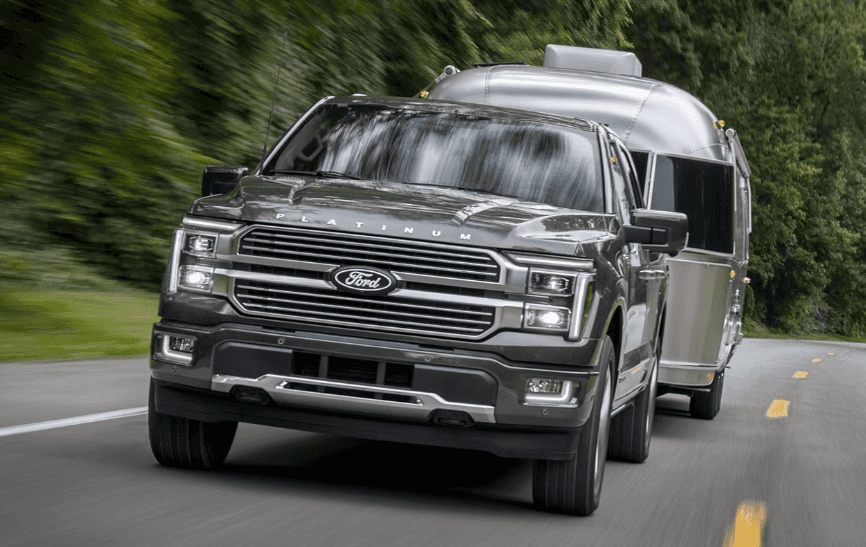
The F-150 dominates America’s truck sales for good reasons; one of these is your choice of engines paired with a 10-speed automatic. The standard 3.3L V-6 delivers 290 horsepower and 265 lb-ft of torque. If you need more power, the 3.5L EcoBoost engine produces 400 horsepower and 500 lb-ft of torque. Ford’s SYNC 4 interface and the 12-inch touch screen make job tracking easier. Ford has over 650 commercial service centers nationwide that can connect you with more than 300 approved upfitters for customization.
The F-150 achieves a combined city and highway fuel economy of between 22 mpg and 24 mpg, depending on which engine and model configuration you choose. You can explore our Ford F-150 inventory online before you visit our dealership.
Ford Super Duty Series (F-250, F-350): Handling Heavy-Duty Tasks
Ford Super Duty trucks deliver; they’re built for towing massive trailers, dragging loaded goosenecks across muddy ranches, or hauling materials that lighter trucks can’t. Super Duty trucks are available in F-250 or F-350 configurations and offer four engine options, depending on the model and trim level: a 6.8L V-8 gas-powered engine, a 7.3L V-8 gas engine, a 6.7L Power Stroke V-8 Turbo Diesel, and a 6.7L High Output Power Stroke V-8 Turbo Diesel.
The Pro Power Onboard feature eliminates the need to drag separate power units to job sites. You can choose from different power levels: 2 kW runs small devices, 2.4 kW handles multiple small tools, and 7.2 kW can supply larger power tools. It’s activated via the touch screen, dashboard button, or FordPass app. There are outlets in both the bed and the cab that provide power wherever you need it.
Ford Transit: Versatile Van for Transport and Delivery Services
The 2025 Transit Van accommodates people, cargo, or both, with seating for two to 15 passengers. You can choose from three roof heights and two lengths. Engine options include the standard 3.5L V-6, which produces 275 hp and 260 lb-ft of torque, and the more powerful 3.5L EcoBoost V-6, which generates 310 hp and 400 lb-ft of torque.
The Transit has 349.6 cubic feet of cargo space in the long version or 425.4 cubic feet in the extended model. It tows up to 4,500 pounds and can carry a maximum payload of 3,475 pounds while using less fuel than bigger trucks. You can choose between a standard 25-gallon tank or opt for the larger 31-gallon tank, given the considerable distances businesses must cover in Tom Green County.
Technical features include Ford’s SYNC 4 with a 12-inch screen, Apple CarPlay, Android Auto, and a 360-degree camera, which is helpful for parking. You can choose between rear-wheel drive and all-wheel drive for improved traction on rougher roads. The Transit works for delivery companies, mobile services, or any business that needs a flexible vehicle.
Ford Ranger: An Adventurous Choice for Smaller Enterprises
The Ranger is tough enough for rough trails but small enough to park downtown without taking up two spaces. These midsize trucks cost about 30% less than full-size models.
The 2.3L EcoBoost engine is standard on the XL, XLT, and Lariat trims, while the 2.7L EcoBoost is available as an upgrade on the XLT and Lariat. The Raptor trim features a unique 3.0L EcoBoost V-6. The 2.3L engine, paired with rear-wheel drive, achieves 21 mpg in city driving and up to 26 mpg on the highway. Rangers cost less to run, use less gas, and lose value less quickly. For plumbers, electricians, landscapers, and other small business owners who need a truck but don’t haul massive loads, the Ranger makes financial sense without sacrificing capability.
Leasing vs. Buying: Best Options for Business Owners
Leasing offers lower monthly payments and immediate tax benefits, as you can fully write off lease payments in the same year. Most leases run two to three years with options to return, renew, buy out, or extend. Watch out for mileage caps and wear-and-tear restrictions, as they can incur additional costs if your work requires vehicles to cover a high number of miles.
Buying a vehicle builds equity and allows you to modify it for specific work needs, such as adding tool racks, equipment, or company logos, without needing permission. Section 179 allows businesses to deduct the full purchase price of qualified equipment, up to the annual deduction limit, in the year the equipment is first used. We recommend discussing your financing options with your tax professional before making a purchase. Don’t forget that you can trade in your current truck; you can even use our value your trade tool to estimate how much you can apply to a down payment, if you choose to do so.
Maintenance and Service: Keeping Your Ford Fleet Operational
F-150s require service every 5,000 miles, or approximately every five months. Basic maintenance includes checking fluids and hoses, changing oil and filters, and rotating tires. The 10,000-mile service includes replacing cabin and engine air filters and spark plugs, flushing the coolant and transmission fluid, and changing the rear axle lubricant. Stick to Ford’s recommended maintenance schedule to maximize your truck’s longevity.
Ford’s certified service centers prioritize commercial fleets by using thorough diagnostics to catch issues before they become expensive problems, and our Jim Bass Ford dealership in West Texas is no exception. We’re a full-service dealership in San Angelo, offering sales, repairs, parts, and body work, and we’re open Monday through Friday from 7 a.m. to 7 p.m. and Saturday from 8 a.m. to 5 p.m.
Which Ford Truck Should It Be?
Picking the right Ford for your West Texas business depends on your daily needs. For flexibility and fuel economy, the F-150 could be an ideal choice. If you regularly haul heavy loads, you’re better off with one of the Super Duty trucks. The Transit is perfect for moving cargo or people, while the Ranger delivers if your needs are more modest.
Test Drive a New Ford Business Vehicle in San Angelo Today
If you’re ready to find the Ford that fits your business, contact our Jim Bass Ford staff to schedule a test drive. We’ve been helping local business owners for over 60 years, and we understand the specific needs of oil field crews, ranchers, and contractors when it comes to their vehicles. From choosing the right truck to keeping it running, having a local partner who knows both Fords and the Concho Valley region makes all the difference.

0 comment(s) so far on Which Ford Is Best for Business Owners in West Texas?